
Krigara turns scientific decisions into a repeatable process
Krigara is a set of capabilities that work together: knowledge, models and decisions, with people keeping the judgment.
The literature, turned into data
Every table, figure and caption in 1.55 million scientific papers is turned into data the AI can compute with: more than 40 million measurements, each with its units and the page it came from. On top sits a structured database of 782,000 rock analyses.
It lives on our own servers and grows with every project.
It runs the science, not just reads about it
Language models can talk about science. Krigara does its work: it operates each field’s own software, from satellite imagery, geochemistry and well logs to reservoir simulation and reaction kinetics, and checks every result against measurements.
An answer with its evidence and its uncertainty
The output is a decision, not a report: where to drill, which site to store in, what to change in a model. Every number is traceable to its source, and every decision says how sure it is.
A reviewer that reads everything
Checking results against all the evidence is also how it finds mistakes. It caught two errors in other laboratories’ published data within minutes: a survey section rotated by 90 degrees and a misaligned instrument. Both were confirmed weeks later.
Reading a paper is the easy part. Krigara’s strength is what comes next: it understands what each number means, stores it with everything it depends on, and finds it again years later to combine with other work.
A paper, and the table inside it
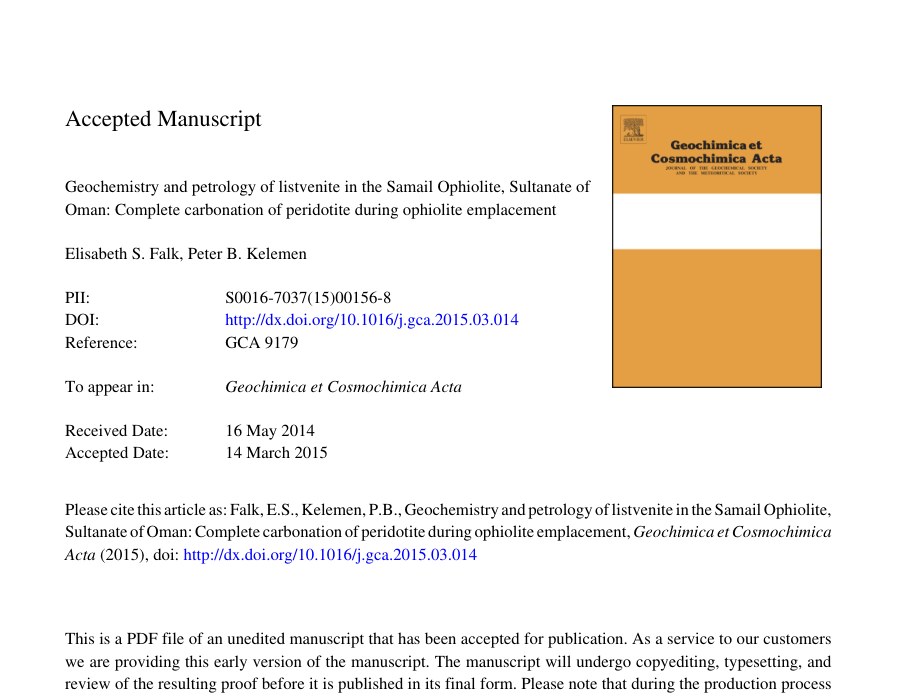
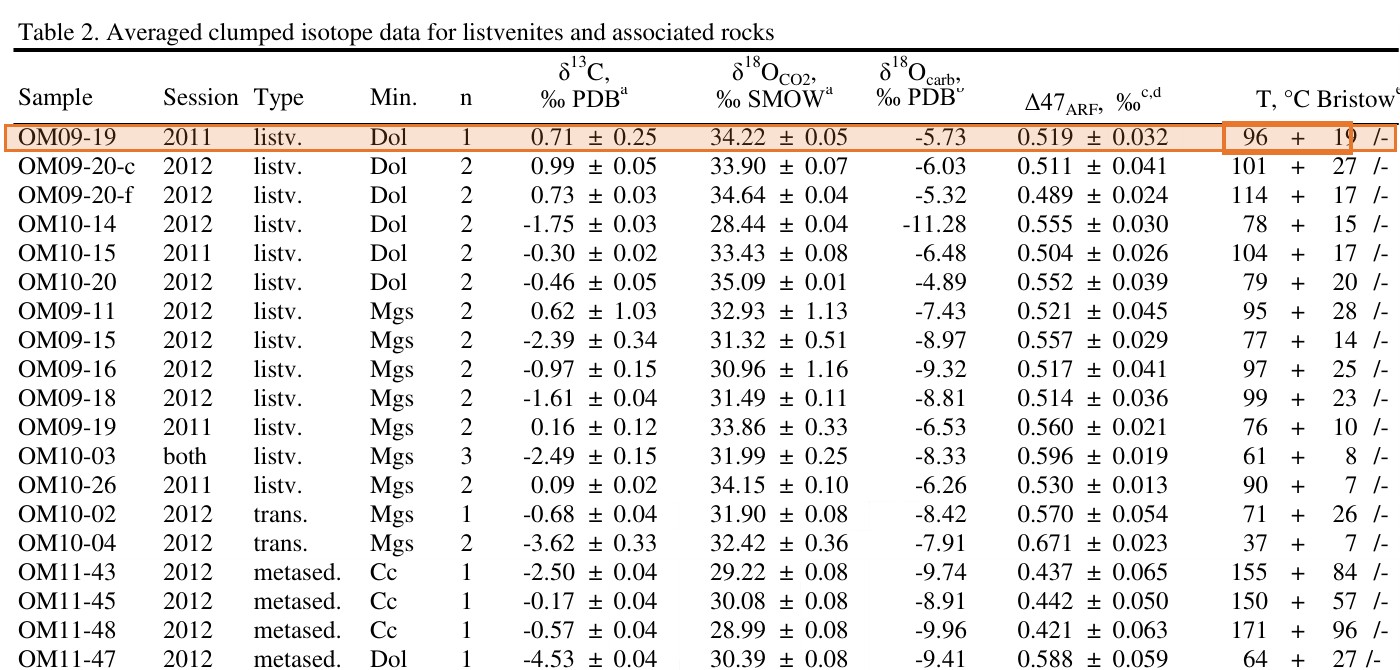
Every value, with its context
Not just the number: the sample, the rock, the mineral, the place, the method and the page it came from.
Linked to what it means
The value is stored as the formation temperature of a listvenite, a rock the knowledge base knows is carbonated peridotite, and tied to the paper’s own conclusion. For this one paper: 30 concepts, 29 claims, 145 measurements and 4 field sites, all connected.
Years later, a new question
| Falk & Kelemen 2015outcrop, Wadi Mansah | 90 ± 15 °C |
| Beinlich et al. 2020drill core BT1B, matrix dolomite | 98–107 °C |
| Kelemen et al. 202245 samples, core and outcrop | 100 ± 46 °C |
| Kelemen et al. 2011earlier review estimate, flagged | ~200 °C |
| Streit et al. 2012carbonate in serpentinite: a different rock, kept apart | 23–43 °C |
From months of reading and a dozen specialists to a decision in hours, with the expert’s day spent on judgment.
Hours, not months
The reading, the modelling and the checking run in parallel, not one specialist at a time.
All of the evidence
Every relevant paper and dataset, not the few a team had time to read.
Broad patent applications
Our applications cover the method across fields of science, not one application.
See it on your problem.
Contact us to schedule a demonstration on a question from your field.
Book a demo